
The Walk That Changed Nothing – and Everything
You’ve probably had one of those days where your brain won’t quiet down. The kind where you’re sitting indoors, scrolling, overthinking, and nothing helps. Then someone suggests, “Why don’t you go outside for a bit?” – and your first instinct is to roll your eyes.
But then you go. And somehow, twenty minutes later, something shifts. You’re not sure what happened. You didn’t solve any of your problems. Nothing changed. And yet, you fell … lighter.
That’s not a coincidence or a placebo. There’s real science behind why stepping outside – whether it’s a park, a beach, a trail, or even a quiet street lined with trees – has the power to shift your mental state. It’s called nature therapy, and it’s one of the most accessible, understood tools for emotional regulation available to us.
What Is Nature Therapy, Exactly?
Nature therapy (also called ecotherapy or green therapy) refers to any intentional time spent in natural environments for the purpose or improving mental, emotional, or physical well-being. It’s not a new concept – humans have lived in and alongside nature for most of our existence. What’s relatively new is the science confirming what many cultures have known for centuries: being outdoors heals.
Unlike conventional therapy, nature therapy doesn’t require waiting room, an appointment, or a copay. It can look like a solo hike, gardening in your backyard, sitting by a river, or simply eating your lunch on a patch of grass instead of at your desk.
The key is intentional exposure – being present in natural setting, not just passin through it.
What Happens in Your Brain When You Go Outside
Your Stress Hormones Actually Drop
When you spend time in nature, your body’s stress response begins to dial down. Studies have shown that time spent in green spaces lower cortisol levels – the hormone most associated with chronic stress. One well-known study out of Japan found that participants who walked through a forest had significantly lower cortisol and heart rate compared to those who walked through an urban environment for the same amount of time.
This is partly why even a short walk outside during a stressful workday can feel hitting a mental reset button.
Your Brain Shifts Into a Different Mode
Urban environments demand what researchers called directed attention – the focused, effortful kind of thinking required for tasks, decision-making, and filtering out noise. That kind of attention is exhausting, and over time it contributes to mental fatique.
Natural environments, on the other hand, engage what’s called involuntary attention – the soft, effortless fascinations you experience when watching clouds move, listening to birds, or following the ripple of water. This gives you directed attention a chance to recover. It’s the neurological equivalent of letting a tired muscle rest.
This theory, known as Attention Restoration Theory (ART), helps explain why people consistently report feeling mentally clearer after spending time outdoors.
Mood-Boosting Chemicals Get a Natural Lift
Time outdoors is associated with increased production of serotonin – the neurotransmitter linked to mood stability, emotional resilience, and a sense of calm. Sunlight exposure plays a significant role here. Natural light helps regulate your body’s internal clock and supports serotonin synthesis, which is why seasonal changes in light can dramatically affect how people feel during winter months.
There’s also growing research on awe — the emotion triggered by vast, beautiful, or unexpected natural scenes. Experiencing awe has been linked to reduced activity in the default mode network (the part of your brain responsible for self-referential thinking and rumination), which may be one reason nature feels like such effective relief from anxiety and overthinking.
The Mood-Regulating Power of Specific Natural Settings
Not all outdoor experiences feel the same, and the research reflects that.
Forests and Wooded Trails
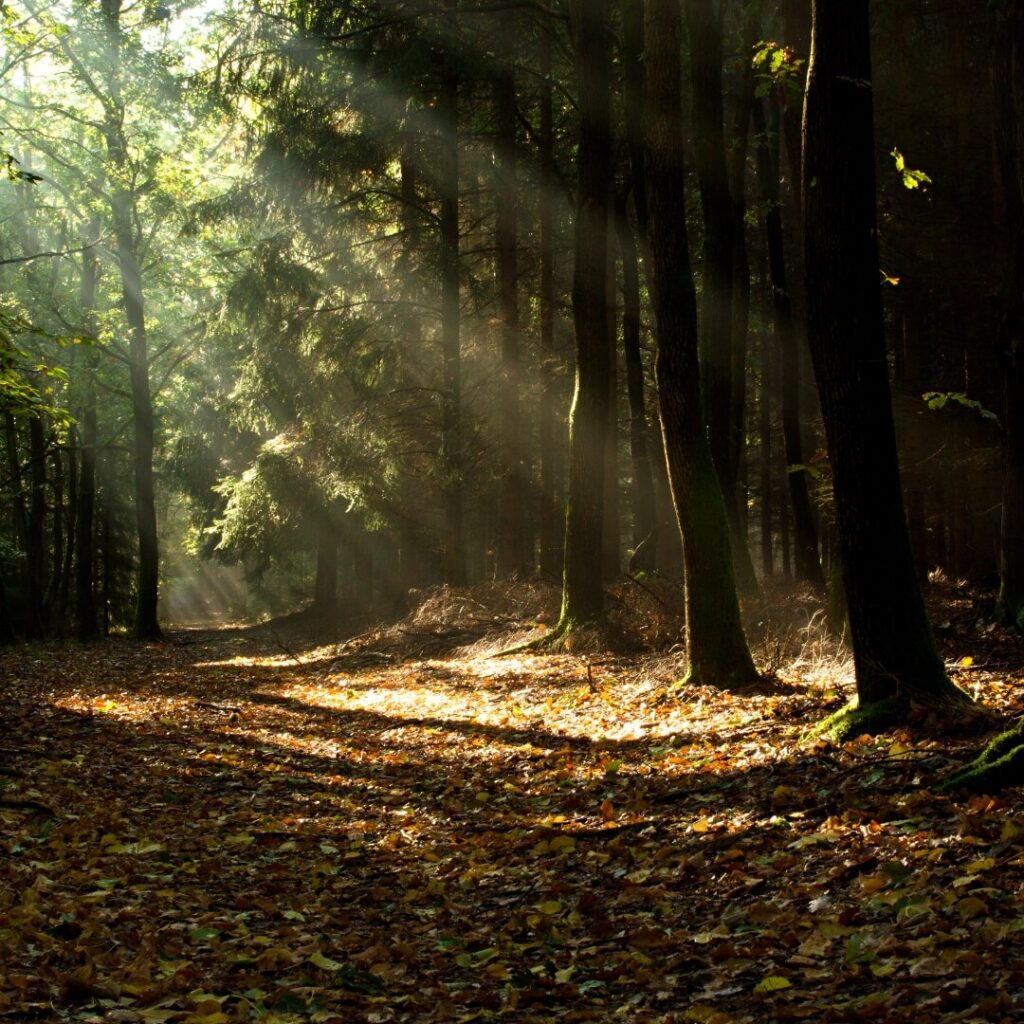
Forest bathing — or Shinrin-yoku, as it’s known in Japan — involves slow, mindful immersion in a forested environment. It’s been shown to reduce anxiety, lower blood pressure, and improve overall mood. Trees release compounds called phytoncides (wood essential oils) that, when inhaled, have been associated with reduced stress hormones and improved immune function.
Water and Coastal Environments
Being near water — whether ocean, river, or lake — has a particularly calming effect. Researchers have coined the term “blue mind” to describe the meditative, mildly alert mental state that water tends to induce. The combination of visual, auditory, and sensory cues from water appears to activate the parasympathetic nervous system, helping the body shift out of fight-or-flight mode.
Urban Green Spaces
You don’t have to live near a forest or a coastline to benefit. Urban parks and green spaces offer many of the same mood-regulating effects on a smaller scale. Even short, regular visits to a city park have been associated with improved emotional well-being. What matters more than the setting’s grandeur is consistency — regular, repeated exposure to greenery produces cumulative benefits over time.
Why Modern Life Makes This Harder (and Why That Matters)
The average person today spends over 90% of their time indoors. That’s a dramatic shift from how humans have lived throughout history, and it has real consequences for mental health. Rising rates of anxiety, depression, and burnout don’t have a single cause — but the near-total removal of humans from natural environments is likely a contributing factor.
There’s even a concept called nature deficit disorder, introduced by author Richard Louv, which describes the psychological and behavioral consequences of disconnection from nature. While it’s not a clinical diagnosis, it points to something many people intuitively feel: a sense that something is missing when life becomes entirely screen-based and indoors.
The good news is that you don’t need to overhaul your lifestyle to address it.
Simple Ways to Use Nature Therapy in Your Daily Life
You don’t need to go on a wilderness expedition to experience the mood-regulating benefits of nature. Here are practical, low-effort ways to weave it into your routine:
- Morning light, even briefly. Step outside for 5–10 minutes in the morning before you look at your phone. Natural light in the morning helps set your circadian rhythm and supports serotonin production.
- Walking meetings or lunch breaks outside. If you can take a phone call while walking through a park or even a quiet sidewalk with trees, do it.
- The “20-minute rule.” Research suggests that 20 minutes in a natural setting is enough to produce measurable reductions in stress hormones. This is a realistic, achievable goal on most days.
- Gardening or tending plants. Even container gardening on a balcony connects you to natural cycles and has been shown to reduce anxiety.
- Mindful nature observation. Instead of walking with headphones in, try paying attention to what’s around you — the quality of the light, the sounds, the textures. This engages that restorative involuntary attention.
Nature Isn’t a Cure — But It’s a Powerful Support
It’s worth being honest here: nature therapy isn’t a replacement for professional mental health support. If you’re living with depression, anxiety, trauma, or any other mental health condition, please continue to work with a qualified professional. Nature is a complement, not a substitute.
What it is, though, is a freely available, side-effect-free, consistently supported-by-research tool for emotional regulation. It costs nothing and requires no special equipment. The main barrier is remembering — and choosing — to use it.
Your nervous system was shaped by millions of years of living in the natural world. It hasn’t fully adapted to fluorescent lighting, notification sounds, and concrete. When you step outside — especially into green or blue spaces — you’re not just “getting some air.” You’re giving your brain the conditions it was wired to function in.
You don’t need a perfect trail, a scenic view, or a full hour. You just need to go outside with a little intention and a little presence.
Start small. Even a ten-minute walk in a nearby park, done regularly, can meaningfully shift how you feel over time. Your mood isn’t just in your head — it’s also in the trees, the water, and the light.