
It’s 8:30 PM. The dishes are drying, the kids are asleep, and you finally collapse onto the sofa. But while your body is still, your brain is sprinting. Did I sign the field trip form? Is there enough milk for breakfast? When did the dog last get this heartworm pill?
This relentless background hum is the mental load. It isn’t just the chores; it’s the management, the anticipation, and the cognitive tracking required to keep a life on track. It is the invisible work that costs real energy, even when no one sees it happening.
What Mental Load Actually Is
To address mental load, we must distinguish from tasks:
- The Task: Folding a load of laundry.
- The Mental Load: Noticing the toddler is out of clean socks, checking the weather to see if they need heavy sweaters tomorrow, and realizing the detergent pod container is nearly empty.
Sociologist Arlie Hochschild famously called this the “second shift” – the unpaid domestic labor that begins after the professional day ends. Cartoonist Emma later popularized the concept with her comic “You Should’ve Asked,” highlighting a painful truth: Asking someone to tell you what to do is sharing the load. The person doing the “asking” is still the manager; the other is just an assistant.
True partnership requires sharing the noticing, not just the doing.
Where the Load Live
Mental load hides in the margins of daily life, making it easy to overlook.
1. At Home (The Logistics)
A household is a mall, complex organization. The “Manager” handles:
- Forecasting: Knowing the car registration is due next month.
- Logistics: Re-routing school pickup because of a partner’s late meeting.
- Inventory: Remembering a friend’s nut allergy before a playdate or tracking clothing sizes for a growing child.
2. At Work (The Emotional Labor)
This follows you into the office. It’s reading the room during a tense meeting, noticing a colleague is burning out, or quietly adjusting a project timeline because you sensed a team member’s personal struggle. This “emotional labor” is just as draining as domestic management.
3. In Relationships (The Social Glue)
This is the “kin-keeping” – remembering birthdays, sensing a shift in a teenager’s mood, or managing the social calendar so the family stays connected. People often dismiss this as “just caring,” but it is active, sustained cognitive effort.
Why It’s So Exhausting
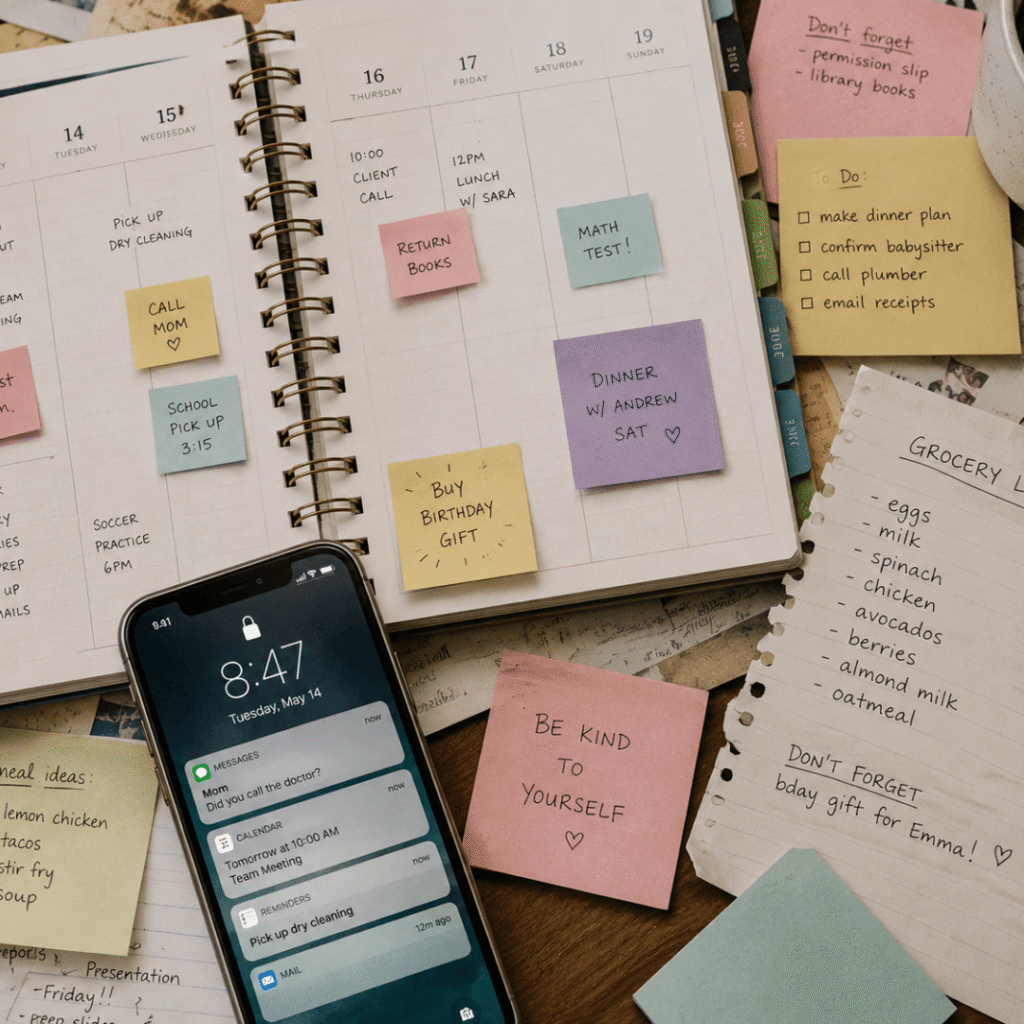
Think of your brain as a web browser. On a “smooth” day, you might have 50 tabs open. They aren’t all active, but they are all using processing power.
When you hold the majority of the “tabs,” you are never truly at rest. This is why “just tell me what you need” feels like another chore – it requires the manager to open yet another tab to delegate. The management remains on one person’s shoulders, leading to a specific kind of soul-deep fatigue.
The Measured Imbalance
Research, including a 2019 study in Sex Roles, confirms that in dual-income households, women still carry a disproportionate share of cognitive labor. This gap widens after children arrive.
Because effective mental load management makes things look “effortless,” the partner not carrying if often doesn’t realize it exists. However, labor that goes unseen eventually breeds resentment and erodes the relationship.
How to Rebalance the Load
If you are drowning in the mental load, or if you’ve realized you haven’t been carrying your share, here is how to pivot:
1. Make the Invisible, Visible
Spend a week listing every mental check-in and decision you make. Present this not as a list of grievances, but as date. It’s hard to ignore a problem once it’s on paper.
2. Transfer Ownership, Not Tasks
Instead of asking for “help” with dinner, hand over the entire domain. Ownership means one person is responsible for the meal planning, the grocery list, the shopping, and the cooking. The other person doesn’t have to think about it at all.
3. Practice “Noticing”
For the partner stepping up: stop waiting for an assignment. Train yourself to look at the fridge, the calendar, and the kid’s shoes. Noticing is a skill that can be built through practice.
4. Choose the Right Time
Don’t discuss the mental load when you’re already exhausted at 9:00 PM. Schedule a “state of the union” during a calm window where both partners can be curious rather than defensive.
A Share Weight
Equality doesn’t mean a 50/50 split of every minute. It means a partnership where both people feel recognized and the invisible work is named. When the “tabs” are shared, both partners finally get the chance to truly close the laptop and rest.